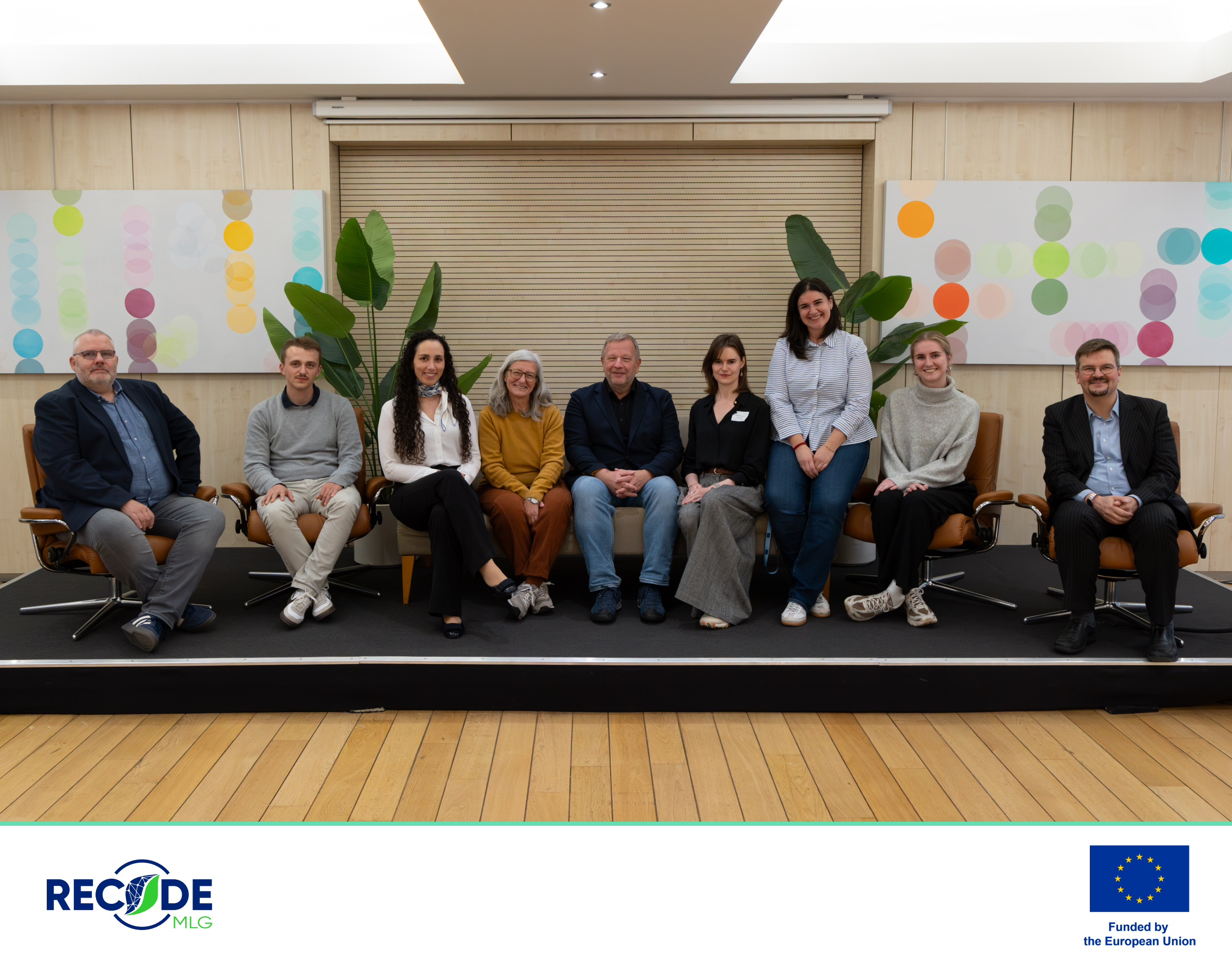
Workshop speakers and participants at Norway House in Brussels on 14 October 2026. Photo: Denis Domazet.
Participation, local knowledge and cooperation across borders connected the contributions at RECODE MLG’s Brussels workshop. Researchers, practitioners and students explored the decisions and institutions that shape Europe’s green and digital transitions.
On 14 October 2026, RECODE MLG held the workshop ‘Twin Transition – Making it work in Europe’s cities and regions’ at Norway House in Brussels. Moderated by Stefan Gänzle, the programme brought together perspectives from European and regional policy practice, RECODE research and the sister projects DeCrises and MICAD.
The afternoon moved between practical approaches to collaboration and research on the conditions for participation. Infrastructure, institutional responsibilities and the resources available to local authorities provided concrete settings for discussing how transition policies take shape in different places.
Connecting collaboration with action
Markku Markkula opened the presentations with experience from innovation and city development. He described innovation camps that bring together people with different backgrounds, including students, researchers, businesses and public authorities, to work on shared challenges. A central part of his account was the follow-up: turning ideas into action plans and returning to review what had been put into practice.
Jon Halvard Eide from Agder County Council brought a regional perspective through examples involving data centres and wind energy. He discussed the relationship between expected benefits and the changes experienced by communities where projects are located. Early involvement, while choices about location and design remain open, was a central point. He also emphasised that public feedback needs a route into decisions.
Perspectives from sister projects
Giga Mukutadze from the University of Jyväskylä presented work from DeCrises on local and regional authorities in the green transition. His contribution highlighted differences in institutional powers and the demands placed on local teams, including expertise, funding and the time needed to develop plans.
A remote contribution from MICAD introduced its work on inclusive metropolitan planning. It addressed challenges that cross municipal boundaries and the need for cooperation between municipalities, institutions and communities. These contributions placed RECODE’s work alongside related research on local participation and coordinated action.
Three perspectives from RECODE research
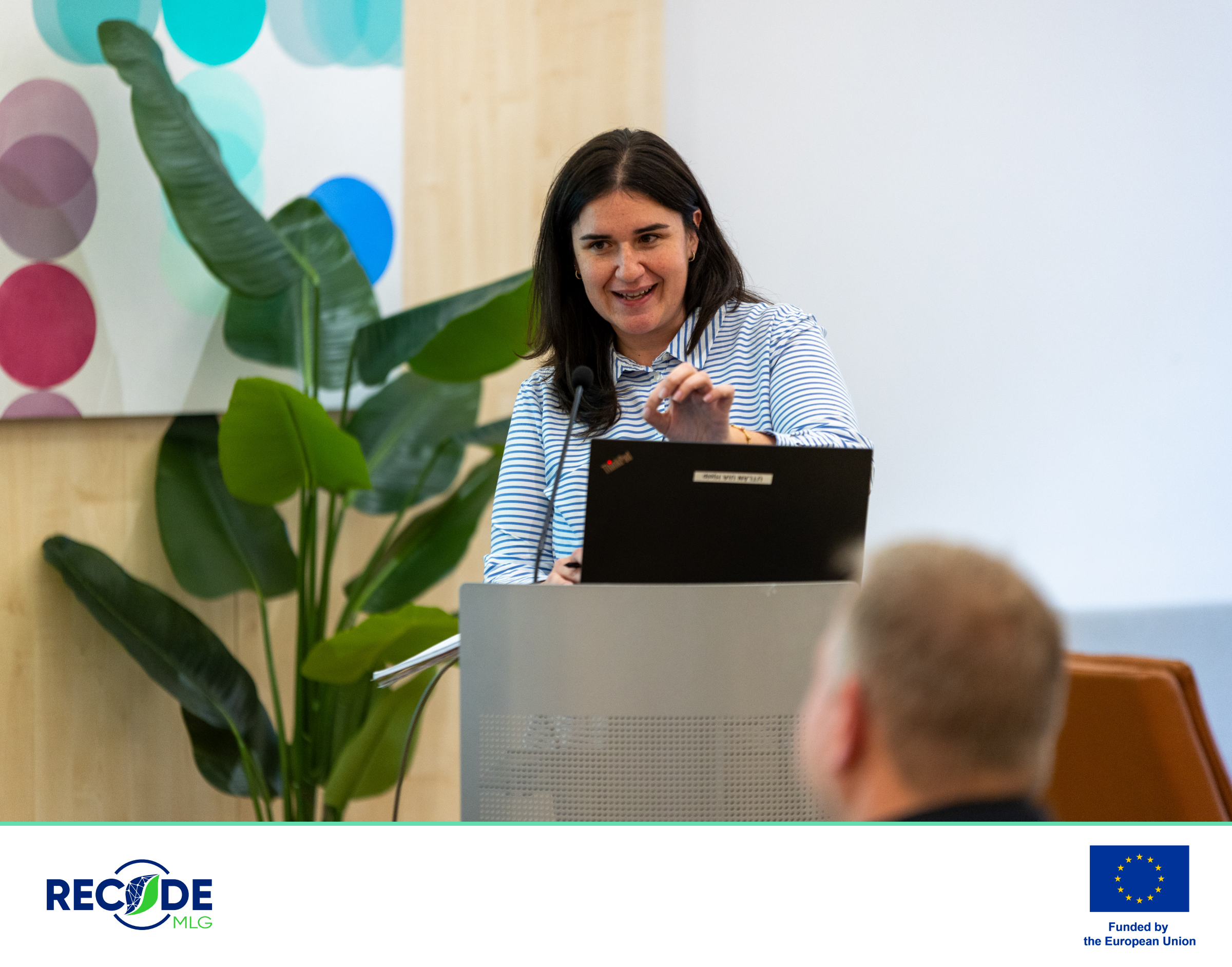
After the break, Gloria Ziglioli from the University of Agder introduced RECODE’s focus on co-creation and multilevel governance. She emphasised the involvement of people in policymaking and the ambition to make transition processes more democratic and fair. Her introduction led into three presentations of ongoing research.
Tatiana Saraseko from the University of Groningen explored city networks in European climate and energy governance. She examined their roles in bringing local priorities into European policy discussions and connecting local authorities with information and support for implementation.
Katharina Müller from Heidelberg University introduced survey research conducted in Germany, Norway and Romania. The survey examines green and digital skills, training opportunities, trust in institutions and people’s desired and experienced influence over decisions.
Simona Piattoni from the University of Trento presented research on cross-border transport corridors, drawing particularly on the Brenner area between Italy and Austria. Her contribution examined local participation and the distribution of costs and benefits when infrastructure serves ambitions that extend across borders.
Continuing the exchange
The workshop gave students an opportunity to encounter ongoing research alongside perspectives from policy practice. Across the contributions, participation was closely connected with responsibility, capacity and the different circumstances in which European policies are implemented.
RECODE will explore two contributions in greater depth in forthcoming website articles: Tatiana Saraseko’s work on city networks and Simona Piattoni’s research on participation in cross-border transport projects. Together, these pieces will develop themes introduced during the workshop.
The Brussels visit also included a conversation with RECODE advisory board member Justus Schönlau on 13 October. The interview article ‘From consultation to influence: local voices in Europe’s green transition’ is available on the RECODE website.
RECODE thanks the speakers, colleagues from DeCrises and MICAD, and all participants for contributing their experience, questions and perspectives. The exchange forms part of the project’s continuing examination of co-creation across places, institutions and levels of government.
Funded by the European Union. Views and opinions expressed are those of the author(s) only and do not necessarily reflect those of the European Union. The European Union cannot be held responsible for them.