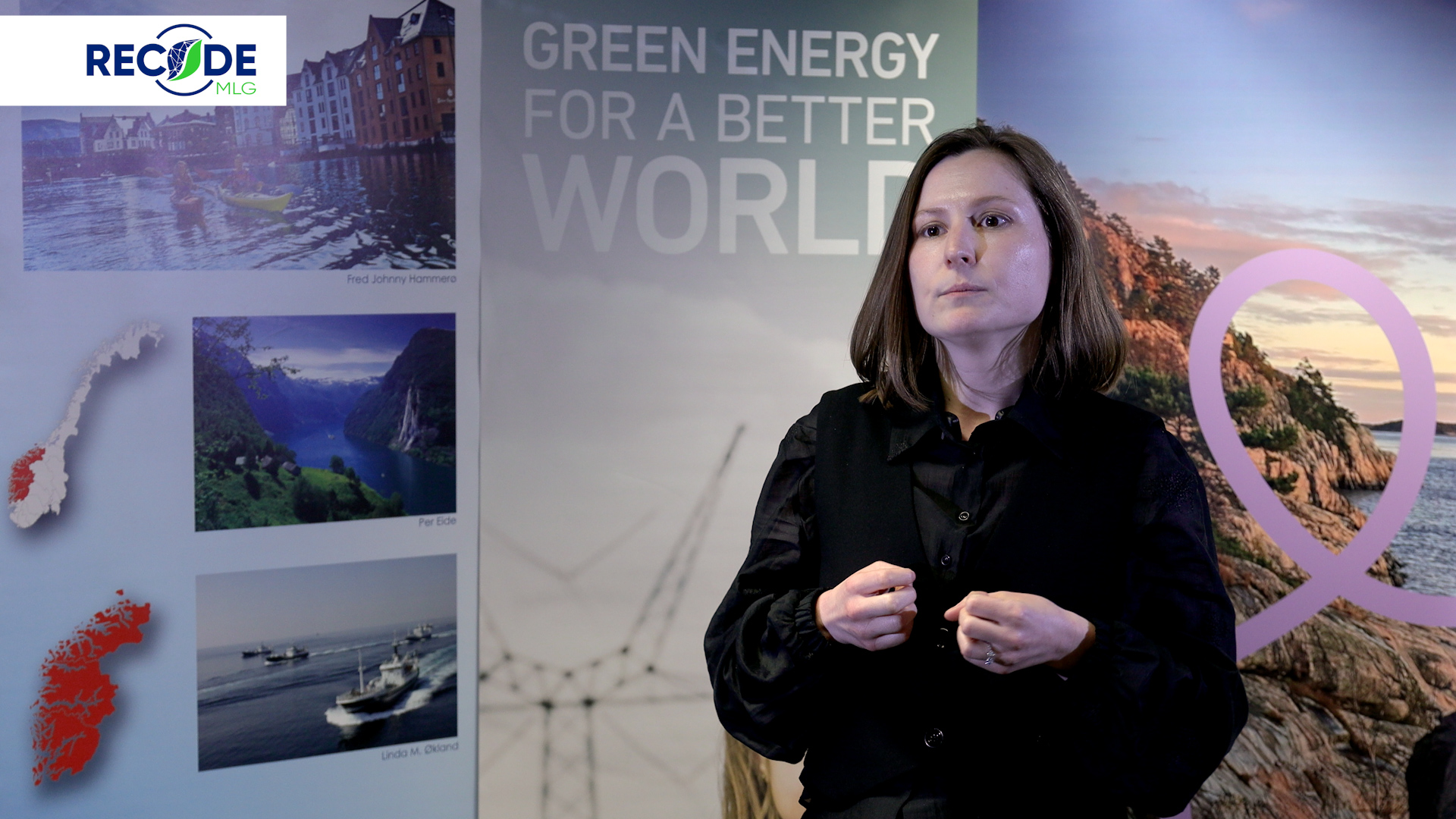

Matúš Mišík is a Slovak political scientist specializing in European energy policy, energy security, and European Union (EU) governance. An Associate Professor at Comenius University Bratislava, Matúš teaches and conducts research on European integration, energy security and governance, climate policy, decarbonization and EU decision-making. He is also a member of the research team of DeCrise (https://decrises.eu/), a project funded under Horizon Europe working on the same topic as RECODE MLG. He has published extensively in leading academic journals as and has contributed to numerous international research projects examining the evolution of EU energy policy and its implications for member states. His research provides evidence-based insights on some of the EU’s most pressing energy and climate challenges.
Recently, Matúš Mišík participated in the Writing Policy Brief Recommendations Workshop, initiated by the RECODE MLG project and organized by the University of Agder, Norway, in partnership with the sister projects DeCrises (https://decrises.eu/), and MICAD (https://www.micadproject.eu/)
We caught up with him after the event to ask him some questions about writing policy recommendations and communicating with policymakers:
1 When It comes to research, why must evidence drive policy and what are the stakes Involved?
There are several reasons why I think that science should inform policymaking and why scientists should share their research with policymakers. The first one is a practical one: research is, in most cases, publicly funded. Therefore, the results of such publicly funded research should contribute to improving the public sphere. Supporting decision-makers by offering policy recommendations and providing policy implications is one of the ways to do this. Second, research usually collects unique data that does not exist outside of such research. Therefore, researchers have a great opportunity to contribute to evidence-based decision-making by offering arguments grounded in original data. Third, researchers are not doing research for themselves or just for other researchers. Our goal is to contribute to society’s well-being, and informing the policy-making process is one way to do so.
2 When writing about highly securitized topics like energy independence, how do you ensure your advice remains evidence-based?
When I am conducting research, I do not differentiate among topics when it comes to methodological choices or my efforts to provide objective results. My policy outputs are based on my academic research and thus meet the highest standards of scientific rigour and precision. However, I, as a researcher, acknowledge that my findings are influenced by my personal perspectives and positions. Complex methodologies and scientific curiosity help me overcome this to a certain extent and ensure the highest possible objectivity. On the other hand, I feel obliged to uphold and, if needed, defend basic values such as human rights and democracy. So, this is a difficult question to answer, but is something that I continually ask myself.
3. You write policy briefs in both English and Slovak (such as your work on how civic energy prosumers and vulnerable households respond to energy crises). Do you find you have to frame the problem or the solutions differently when addressing a domestic audience in Bratislava versus an EU-level audience in Brussels?
For me, the choice of language depends upon my aim in writing the brief. If my aim is to provide a detailed analysis of my findings to influence complex processes beyond a national state (such as at the EU level), then I write in English, a universal language that significantly widens the document’s potential impact. This is why most of my policy briefs are written in English, However, sometimes research yields counterintuitive, surprising, or standout findings which are specific to the examined country, which is, in most cases with my research, Slovakia. I focus on such findings in a short document – usually a policy brief, but often also commentary in a newspaper, written in Slovak. In this way, I can influence the political discourse in Slovakia. I also adjust the length of the text depending on which audience I am targeting and the type of analysis I am trying to convey.
Thank you for your time today and for this insightful conversation! We eagerly anticipate reading about your future research!