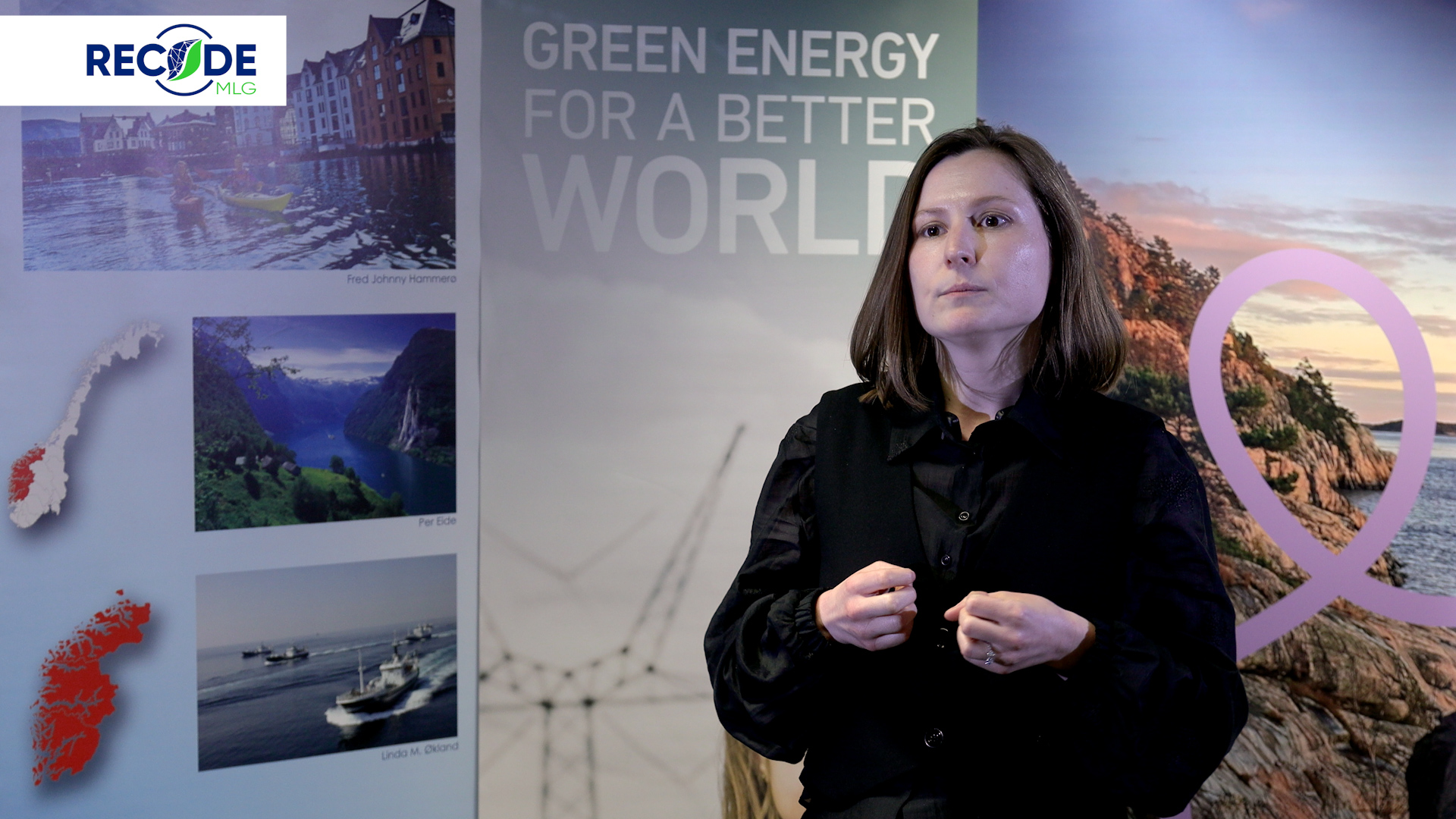

As part of RECODE MLG’s wider engagement with debates on democratic, collaborative, and multi-level governance of transition, Amanda Machin, researcher at the University of Agder and coordinator of this project, and Marjan Marjanović, researcher at the University of Lausanne and contributor to WP2 on Conceptual Development, participated in the keynote panel “Redefining the Future of Planning: Digital Advancement and the Sustainability Transition” at the 6th World Planning Schools Congress in Helsinki, Finland.
The panel was convened by Aleksi Neuvonen, founder of Demos Helsinki, and brought together Amanda, Marjan, and Enza Lissandrello, researcher at Aalborg University, to discuss how planners, who research the various conditions and factors that shape how communities and cities grow, can respond to the intersecting challenges of digital transformation, sustainability transitions, political uncertainty, and democratic participation.
Although the discussion focused explicitly on the future of planning as an academic discipline and profession, it had a far broader relevance. Digitalisation and sustainability transitions cut across policy sectors, territorial levels, public institutions, private actors, civil society organisations, and communities. Planning provides an important interdisciplinary perspective from which to examine how different forms of knowledge, authority, responsibility, and participation are coordinated within multi-level governance.
From a RECODE MLG perspective, planning is not understood simply as the technical management of land, infrastructure, or urban development. It is also a governance practice through which competing futures are imagined, represented, negotiated, and translated into institutional action. The way transitions are planned consequently shapes whose knowledge is recognised, whose interests are prioritised, how responsibilities are distributed, and whether communities can meaningfully influence the changes affecting their territories.
Below are six key takeaways from the panel, prepared by Marjan Marjanović, regarding the democratic and institutional challenges shaping the future of planning and transition governance:
- Uncertain futures must be negotiated across levels of governance. Planning and policymaking must move from predicting and managing the future towards democratically negotiating uncertain futures across levels of governance. Digitalisation and climate urgency should not be used to depoliticise transition through claims of objective data or technical necessity. Multi-level governance must instead reopen questions of care, justice, agency, responsibility, and whose visions of the future shape collective action.
- More information does not automatically produce more democratic decisions. The central challenge is no longer the absence of information, but the fragmented capacity to interpret and use knowledge democratically across institutions and territories. Digital tools can make previously invisible urban and regional realities visible, yet implementation gaps persist when citizens distrust opaque systems, institutions privilege knowledge that fits established models, and actors operating at different governance levels lack mechanisms for meaningful coordination and mutual learning.
- Political choices cannot be outsourced to technology. The future cannot be outsourced to technologies or governance frameworks that promise to resolve political conflicts technically. Artificial intelligence, digital twins, and climate-neutrality frameworks can strengthen coordination and broaden planning horizons. However, they can also narrow political imagination when they translate uncertainty, territorial differences, and competing values into apparently neutral predictions, objective indicators, and realistic targets.
- Democratic transition governance must accommodate conflict. Democratic transition governance must be embodied, relational, territorially grounded, and capable of accommodating conflict. Transitions are experienced differently across places and through everyday routines, fears, dependencies, and exclusions. Participation and co-creation must therefore extend beyond consultation and procedural consensus, allowing marginalised, dissenting, and radical voices to influence how problems, responsibilities, and desirable futures are defined.
- Long-term ambitions must be connected to institutional responsibility. Planning and policymaking should be less concerned with exercising control than with building the institutional conditions through which people and places can thrive and through which transition can be inclusive and democratic. Long-term visions are necessary, but they risk becoming a form of cruel optimism when they impose distant promises without producing material change, clear responsibilities, institutional capacity, or everyday freedoms. Effective multi-level governance must connect strategic ambitions with resources, accountability, and implementation in particular territories.
- The power to represent the future is also the power to govern it. The future of planning will be shaped by who has the authority and capacity to imagine, visualise, model, and govern transition. Because representations influence which problems and solutions become thinkable, planners must act not only as analysts or technocrats, but also as institutional intermediaries and diplomats. Their role is to connect actors and governance levels, translate between different forms of knowledge, and design interventions that invite rather than prescribe, open rather than silence, and enable rather than control.